The right dog bed for every life stage
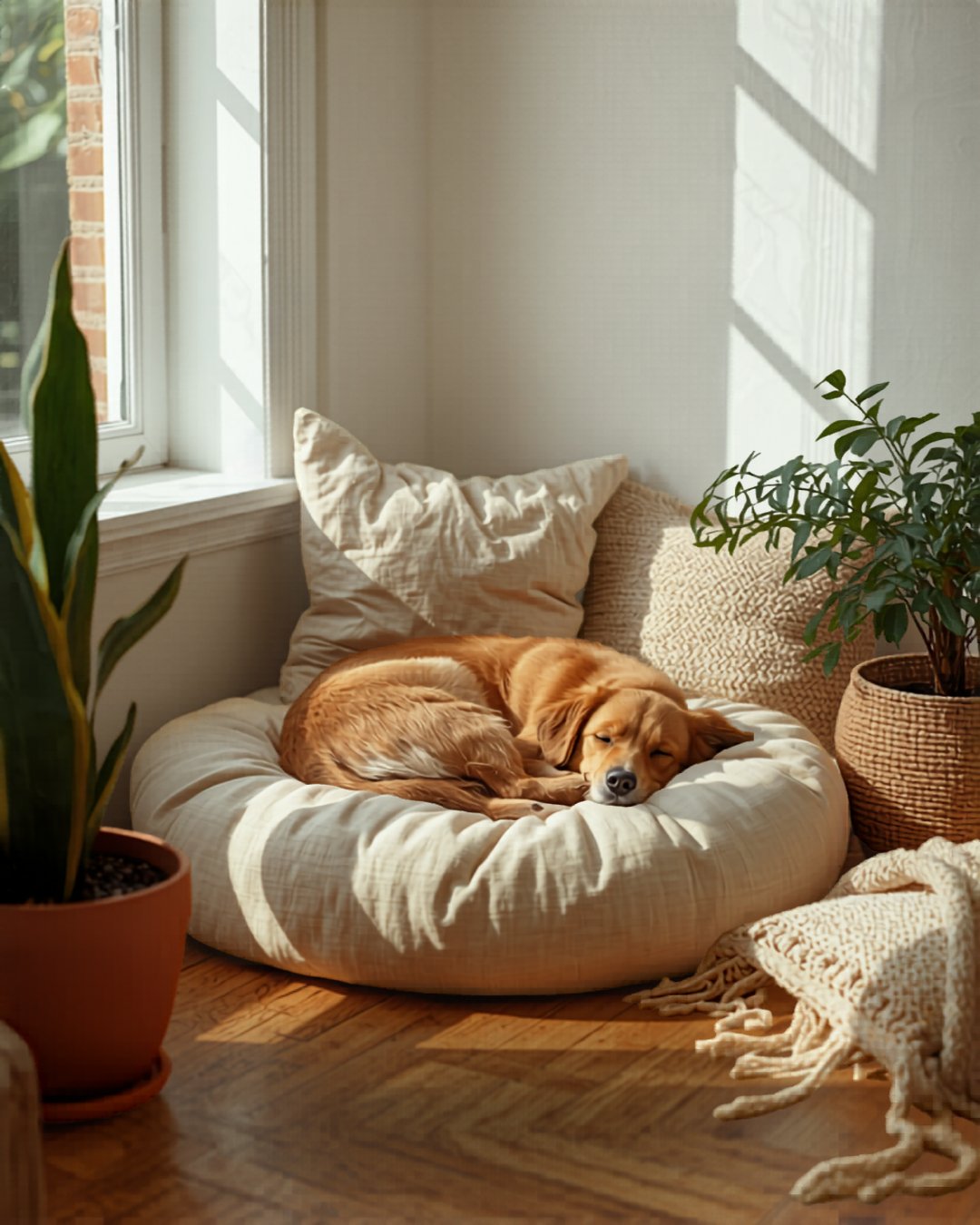
A good bed is one of the most underrated investments you can make for your dog. They'll spend more time on it than you spend in your own bed — dogs sleep 12–14 hours a day, sometimes more. A wrong-sized or wrong-type bed contributes to joint problems, poor sleep, anxiety, and "why does my dog keep destroying the bed" frustration.
Here's how to pick the right one.
Start with size
The most common mistake: buying a bed that's too small. Measure your dog from nose to base of tail while they're stretched out (not curled up). Add 15–20cm for comfortable wiggle room.
Common sizing:
- Small (under 10kg): 60–70cm bed length
- Medium (10–25kg): 80–90cm bed length
- Large (25–40kg): 100–110cm bed length
- Extra-large (40kg+): 120cm+ bed length
If you're between sizes, go bigger. Dogs love to stretch out.
Match the bed to your dog's life stage
Puppies (under 1 year)
Puppies chew, have accidents, and grow fast. Don't spend a fortune on a bed they'll outgrow in six months and possibly destroy in three. Look for:
- Machine-washable cover (you will need to wash it)
- Durable fabric — canvas or ripstop, not velvet
- Slightly oversized so they can grow into it
Adult dogs (1–7 years)
This is when you can invest in a bed that matches their actual sleeping style:
- Sprawlers (lie flat on their side): flat mats or sofa-style beds with low edges
- Curlers (sleep in a ball): donut or nest-style beds with raised edges for head support
- Burrowers (love to tuck under blankets): cave or hooded beds
Watch how your dog sleeps for a few days before buying. It'll save you a return.
Senior dogs (7+ years, or 5+ for large breeds)
Older dogs need joint support, period. Look for:
- Orthopedic or memory foam bases — at least 8–10cm thick
- Low entry height — senior dogs struggle to climb over high edges
- Non-slip bottom — important on tile or wood floors
- Washable, water-resistant cover — incontinence becomes more common with age
An orthopedic bed isn't a luxury for a senior dog. It's the difference between waking up stiff and waking up able to move.
Material considerations
Polyester fill: Cheapest, fine for puppies and chewers. Flattens within a year.
Memory foam: Holds shape, great for joint support. Heavier and harder to wash.
Plush fleece covers: Cozy, dogs love them. Watch out for matting and hair retention.
Canvas or denim covers: Durable, easier to clean, less cozy.
How many beds does your dog need?
More than you'd think. Most dogs benefit from at least two: one in the main living area (for daytime naps near you) and one in the bedroom or their crate. If your dog has multiple favorite spots in the house, smaller mats in each spot beat one big bed they ignore.
What we stock
Our Beds & Comfort collection focuses on plush sofa-style beds available in multiple sizes — a good fit for sprawlers and adult dogs who want soft support without orthopedic-level firmness. If you're shopping for a senior dog or a heavy chewer, let us know what you're looking for — we can point you to what fits.