Five things to look for in a dog bed for senior dogs
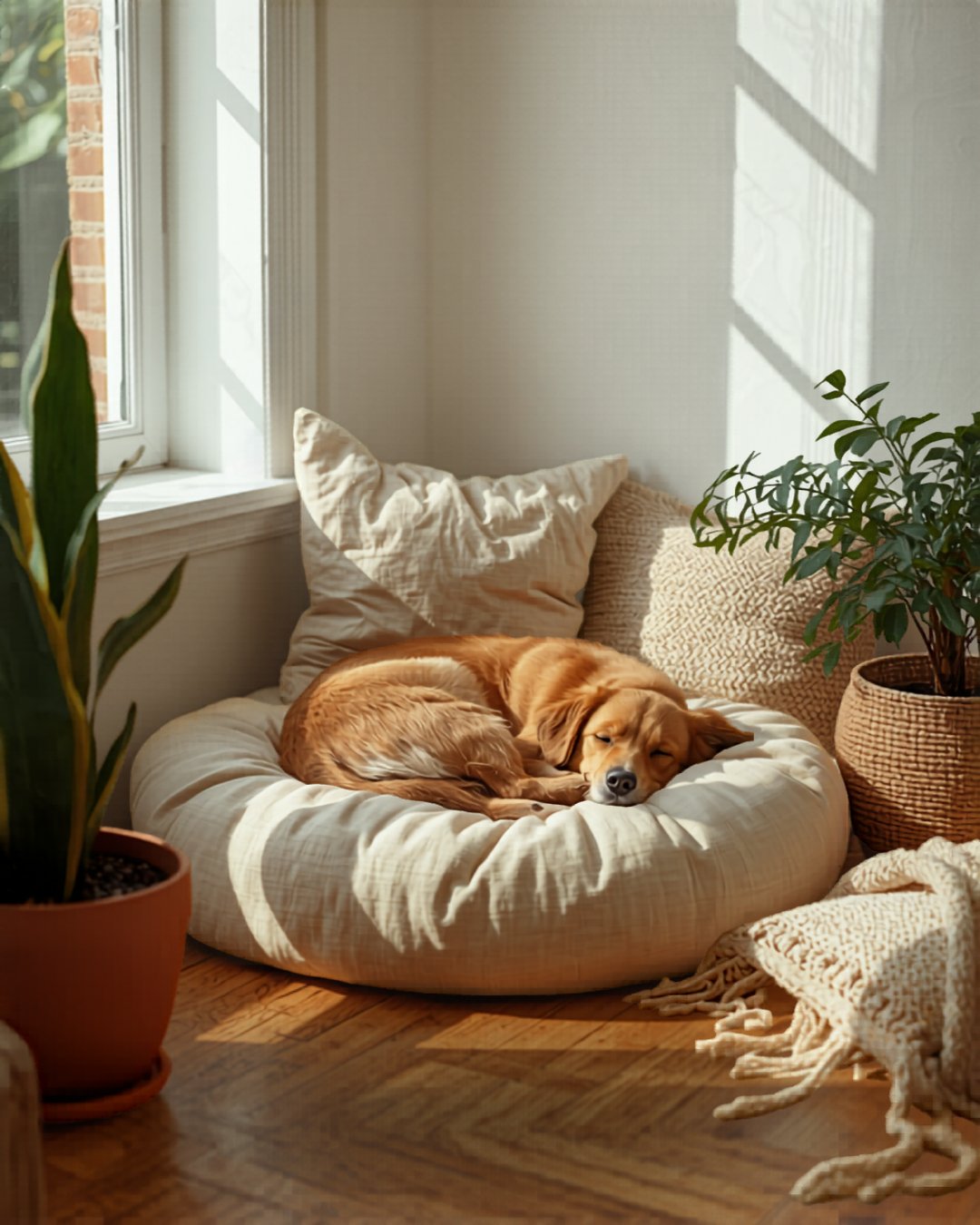
Senior dogs sleep more. Their joints ache more. They're more sensitive to cold. The right bed isn't a luxury for a senior dog — it's the difference between waking up able to move and waking up stiff.
Here are the five things that actually matter when picking a bed for an older dog.
1. Proper joint support, not just "soft"
Plush isn't the same as supportive. A bed that's soft but flattens under the dog's weight leaves them sleeping on the hard floor with extra padding. What you want is memory foam or orthopedic foam at least 8–10cm thick — thick enough to hold the dog's weight without bottoming out.
For larger dogs, look for medical-grade foam (sometimes labeled "orthopedic" or "therapeutic"). For smaller seniors, even a well-stuffed plush bed can work, but check it monthly — fill compresses over time, and a flat bed offers no support.
2. Low entry height
This is the most overlooked feature. A bed with high bolster walls looks cozy in the store but means your senior dog has to step up and over to get in. For a dog with hip dysplasia, arthritis, or general stiffness, that's a real obstacle.
Look for beds with a low entry on at least one side. Some orthopedic beds are designed specifically for senior pets with cutouts that make stepping in effortless.
3. Non-slip bottom
Tile and hardwood floors are slippery. A bed that slides when your dog tries to get up creates anxiety and can cause falls. Either pick a bed with a rubberized non-slip bottom, or put a non-slip rug under any bed on a smooth floor.
This matters more than people realize. Senior dogs who slip a few times start avoiding their bed entirely.
4. Washable, water-resistant cover
Incontinence is more common as dogs age. So is reduced bladder control during long naps. A bed with a removable, machine-washable cover — and ideally a waterproof inner layer — means accidents don't ruin the bed.
This also makes regular cleaning practical. Senior dogs shed more, and a bed you can throw in the wash every 2 weeks stays usable for years.
5. Size and placement
Senior dogs often want to stretch out fully — they're not curling up as tight as they did when they were young. Measure your dog stretched out nose to base of tail, and add 15–20cm.
Placement matters too:
- Away from drafts (cold floors against exterior walls in winter are tough on old joints)
- Near where the family spends time — isolation makes seniors anxious
- Easy floor access — don't put it on a raised platform they can't easily reach
Many owners benefit from having multiple beds: one in the bedroom for nighttime, one in the living area for daytime naps. Senior dogs sleep so much that they appreciate options.
What to skip
Heated beds. Mostly unnecessary unless your home is genuinely cold. They can also cause overheating in dogs who can't move off the heat source.
Raised "cot" style beds. Look great in catalogs, terrible for senior dogs who can't jump up.
Round nest beds. Force the dog to curl up, which is uncomfortable for arthritic joints.
When to upgrade
If your dog is over 8 (or over 5 for large breeds), this is the right time to assess their current bed. Signs they need a better one:
- They struggle to get up or seem stiff in the morning
- They sleep on the floor instead of their bed
- They circle for a long time before lying down
- The current bed has lost its shape
A good bed is one of the cheapest interventions for a senior dog's quality of life. It's worth getting right.
What we stock
Browse our Beds & Comfort collection for plush sofa-style options that work for adult and senior dogs. Have a specific senior dog with mobility issues? Reach out — we can point you to options that fit.